Thursday, April 21, 2022

GPS speaker and panel to discusses effects of dependency on youth and families on April 19


Stephen Hill and addiction psychologist ​Dr. ​Aaron Weiner, and ​clinical psychologist ​Dr. Doug Bolton joined us for a Alcohol Awareness Month presentation on April 19, 2022.  

How does one of four brothers, raised in the same home by loving and supportive parents, end up addicted to drugs for more than a decade while his siblings followed a path to a healthy lifestyle? Hill places a great deal of emphasis on “prevention through protection” and pinpoints potential threats and warning signs for families.

Like other parents of youth addicts, Hill's parents experienced isolation, as well as emotional and financial hardship. Members of their community, friends, and family labeled their son with stigmas. After he hit rock bottom and entered his final treatment program, Hill began to put his life back together. Education, health, wellness and helping others became the top priorities in his life.

After completing his first year of sobriety, Hill was offered a full-time position to work at the same treatment program he went through. He returned to college and earned his J.D. from Brooklyn Law School. In May 2018, he published his memoir “A Journey to Recovery” which became a No. 1 new release in drug dependency on Amazon. 

Following Hill’s remarks, addiction psychologist Aaron Weiner and clinical psychologist Doug Bolton continued this important conversation, giving us  a better understanding of how to prevent and treat a substance use disorder.


For a video of the panel discussion and Q&A session from this event, click HERE 


Take-away

Jordan Esser, Community Initiatives Coordinator, DuPage County Health Department and Project Coordinator, DuPage County Prevention Leadership Team (PLT)

"As the Project Coordinator of the DuPage County Prevention Leadership Team (PLT), I focus primarily on substance use prevention and mental wellness for youth throughout DuPage. For that reason, the PLT is a proud sponsor and partner of the Glenbard Parent Series (GPS) and was happy to partner on the program on April 19th, Stephen Hill-A First Choice and a Second Chance. Stephen shared his truly compelling story about a young man who had an involved, supportive family, was a talented student athlete and good student but who went down a path that started with alcohol and marijuana use and high school and quickly escalated to an opioid addiction. His story is an example of how addiction can happen to anyone and can happen quickly. My main takeaway from this program is the importance of early prevention and talking with your kids about healthy choices, early and often. Although it may not always feel like it, research shows that over 80% of young people ages 10-18 say their parents are the leading influence on their decision whether to use alcohol and drugs. Our kids really do care what we think! That is why it is so important to have clear expectations about youth drug use and make those expectations known to your kids. Share facts with them about the health risks associated with alcohol and drug use during adolescent when their brains and bodies are still growing and the legal risks of underage drug use."

For more tips on how to have these important conversations with your teen, visit the DuPage County Prevention Leadership Team website at www.dupageplt.org. 

Resources


Friday, March 25, 2022

Michele Icard provides a model for overcoming parent's language obstacles at GPS event on March 16, 2022

On March 16, the Glenbard Parent Series hosted Michelle Icard in programs based on her book, 14 Conversations You Need to Have by Age 14.

Author Michelle Icard provides a model for overcoming parent's language obstacles. Based on her most recent book, Fourteen Talks by Age Fourteen, Icard  guides parents of tweens and teens past their fears and challenges around covering “the important stuff” with their kids and into a confident enough position to have meaningful conversations where their kids will actually engage.  While the book covers fourteen topics, Icard included five from the book:  Becoming Independent, Keeping Creativity Alive, Taking Care of Yourself, Living with Technology, and Helping Others. 

Michelle Icard is a speaker, author, and educator who helps kids, parents, and teachers navigate the complicated social world of adolescence. Her first book, Middle School Makeover: Improving the Way You and Your Child Experience the Middle School Years, is a primer for the social and emotional changes parents and kids navigate when mid-life meets middle school under one roof.

Link here for a recording of the Q and A from the program:  https://youtu.be/ARDYsaKB76E

Community Consolidated School District 89 Superintendent Dr Emily Tammeru and Queen Bee School District 16 Superintendent Dr Joe Williams hosted the events and shared the following takeaway: 

"Icard calls the years from age 11-the mid 20s a ‘construction phase’.  It begins when tweens experience major changes to their brain, body and image, as their #1 fear becomes-am I normal? This period requires the adults in their lives to adapt, and be prepared for these normal, risk taking changes-as youth work to integrate with peers. They need us to pivot to the role of assistant manager, to ‘fix less and listen more’, empathize, get a hobby ('other than our children') and learn a new language in our communication with them: BRIEF, breathe, relate, interview, echo, give feedback. Try not to take these expected changes personally, and make time for fun, together."


RESOURCES

Web site for Michelle Icard

Lindsey Hein Podcast Episode 67: Michelle Icard – Fourteen Talks by Age Fourteen (Feb 8, 2022)

GPS Take 5: Parent Preview for this event with Michelle Icard

WGN interview with Icard  (Feb 26, 2021)


Monday, March 7, 2022

Self-compassion pioneer Dr. Kristin Neff shares practices to improve mental health with GPS on Feb 22, 2022

GPS hosted Dr. Kristin Neff on February 22 to walk us through practices designed to increase motivation, foster grit and a growth mindset, and rebound from failure – all through the cultivation of self-compassion.  Our first instinct when we fail, suffer, or feel inadequate may be to criticize or to judge ourselves—but there is a better way to get through life’s hardships, says Dr. Kristin Neff. A way that enables us to achieve our highest potential and lead more contented, fulfilling lives. And that is through self-compassion --  a way of relating to ourselves kindly.

Neff says self compassion has three components (more here):

  1. 1. Self-kindness vs. Self-judgment 
  2. 2. Common humanity vs. Isolation
  3. 3. Mindfulness vs. Over-identification


Dr. Kristin Neff is a pioneer in the field of inner strength training and self-compassion. She is the first to empirically study the concepts and create a simple, actionable guide proven to increase motivation, boost resilience, and improve mental health. Both an Insight Meditation practitioner and an associate professor of Educational Psychology at the University of Texas at Austin, her work has been featured in The New York Times, The Atlantic, and Harvard Business Review, among others. She is also the co-developer of an empirically supported training program called Mindful Self-Compassion, and the co-author of The Mindful Self-Compassion Workbook as well as Teaching the Mindful Self-Compassion Program: A Guide for Professionals.

Glenbard South Principal Jessica Santee hosted the event and shared the following takeaway:

 "Dr. Neff provided insight into the many benefits of self-compassion (like greater happiness and calmer households), which involves being kind to ourselves in times of struggle. Self-compassion is not about making yourself feel better at the expense of others, but rather, it involves cultivating feelings of self-worth in any setting – in success or failure. It is treating yourself the way you would treat a friend or a loved one by noticing the sadness, extending empathy and recognizing that it’s human to fail. As caregivers, we need to model self-compassion. In doing so, we let our children know that they, too, are valued and deserving of kindness."

Q and A from this event: GPS Take 5 -The Power of Self Compassion with Kristin Neff (2-16-22) VIDEO HERE


RESOURCES

Web site for Self-Compassion Dr. Kristin Neff  HERE

Kristin Neff: The Three Components of Self-Compassion (Oct 16, 2014) VIDEO HERE

Kristin Neff at TEDx – The Space Between Self-Esteem and Self Compassion (Feb 6, 2013) VIDEO HERE

The Broken Brain Podcast with Dr. Kristin Neff - Dr. Mark Hyman (Jun 11, 2020) HERE

TED Checking In with Susan David: Self-soothing exercises with Dr. Kristin Neff  HERE


Dr. Mona Delahooke speaks on her book Brain-Body Parenting: How to Stop Managing Behavior and Start Raising Joyful, Resilient Kids

On March 3, the Glenbard Parent Series hosted noted clinical psychologist Dr. Mona Delahooke in a program based on her book, Brain-Body Parenting: How to Stop Managing Behavior and Start Raising Joyful, Resilient Kids.

Brain-Body Parenting empowers parents with tools to help their children develop self-regulation skills while also encouraging parental self-care, which is crucial for parents to have the capacity to provide the essential “co-regulation” children need. When parents shift from trying to secure compliance to supporting connection and balance in the body and mind, they unlock a deeper understanding of their child, encouraging calmer behavior, more harmonious family dynamics, and increased resilience.

Delahooke is a licensed clinical psychologist with more than 30 years of experience caring for children and their families. Her just released book is Brain-Body Parenting: How to Stop Managing Behavior and Start Raising Joyful, Resilient Kids. She is a senior faculty member of the Profectum Foundation, an organization dedicated to supporting families of neurodiverse children, adolescents, and adults. She is a trainer for the Los Angeles County Department of Mental Health and is a member of the American Psychological Association and holds the highest level of endorsement in the field of infant and toddler mental health in California, as a Reflective Practice Mentor (RPM).

Rebecca Sulaver ,Glenbard Assistant Director of Teaching and Learning, hosted the event and shared the following takeaway:

"Mona Delahooke wants caregivers to de-emphasize behavior management and shift the lens from consequences/punishment of challenging  behaviors, to an understanding that the behavior IS the message.  Look at like what lies beneath -the tip of the iceberg. What is happening in the body, brain and the central nervous system ? Does the child feel safe? Kids do well if they can. Observe, Interpret, then take action to meet their needs. Create a toolbox (breathing techniques, exercise, music, journaling, self-talk) to calm. Understand some stress is necessary to grow. What works: elevate the relationship with your child-make it a top priority! Find simple moments to connect, and play, so all can restore".

A recording of the Q and A from the event is HERE


RESOURCES

Website for Dr. Mona Delahooke HERE 

Dr. Mona Delahooke Podcasts HERE

Bright and Quirky Interview with Dr. Mona Delahooke and Dr. Stephen Porges VIDEO HERE

Bright and Quirky Interview How to Approach Kids’ Challenging Behaviors, with Dr. Mona Delahooke VIDEO HERE

What Does it mean to Look Beyond Behaviors? (Feb 3, 2021) VIDEO HERE

The Most Important Question To Ask About Children’s Behavioral Challenges VIDEO HERE

Take 5: Preview of Dr. Mona Delahooke’s event VIDEO HERE


Monday, January 31, 2022

David Epstein discusses his latest book, "Range: Why Generalists Triumph in a Specialized World" at GPS event on Jan. 26, 2022

On Jan. 26 the Glenbard Parent Series  hosted David Epstein in a program titled, "The Secrets of Success"  based on his book, Range: Why Generalists Triumph in a Specialized World. 

In his book, Range, Epstein examined the world’s most successful athletes, artists, musicians, inventors, forecasters, and scientists. He discovered that in most fields—especially those that are complex and unpredictable—generalists, not specialists, are primed to excel. Generalists often find their path late, and they juggle many interests rather than focusing on one. They’re also more creative, more agile, and able to make connections their more specialized peers can’t see. He also makes a compelling case for actively cultivating inefficiency. Failing a test is the best way to learn. Frequent quitters end up with the most fulfilling careers. The most impactful inventors cross domains rather than deepening their knowledge in a single area. 

David Epstein is an investigative reporter at ProPublica and prior to that was a senior writer at Sports Illustrated.  He has also written the New York Times best-selling The Sports Gene: Inside the Science of Extraordinary Athletic Performance. Epstein is a graduate of Columbia University where he earned a bachelor’s degree in environmental science and astronomy and a master’s degree in environmental science and journalism.

David Epstein held a Q and A with distinguished Glenbard representatives following his webinar, link HERE.


Dr. Seth Champman, Assistant Superintendent for Finance & Operations, hosted the event and shared the following takeaway:

"David Epstein shared his research-based perspective that for most children 'sampling' of many opportunities in sports or the arts will be more beneficial, and lead to greater overall success and happiness, than early 'specialization'.

 While having an early focus in one particular arena can yield positive outcomes in the short-term, the students who take more of a generalist approach to their extracurriculars experience enjoy larger gains over the long term.  Epstein recommends we talk to our children to understand what they enjoy, and  to help them discover what they learned from any given activity. 

 Always remember, setbacks and challenges do have an upside, as they provide an opportunity for personal growth. Many high profile (and highly successful) people have struggled early on,  and only achieved their successes much later in life, later than we may realize".

Thank you to our additional sponsors for this event: Deerfield Parent Network, Stand Strong Coalition, Parent Community Network, Link Together Coalition.

Resources

David Epstein web site HERE

Range Widely: Broadening your cognitive toolbox (newsletter) HERE

An Introduction to "Range" by David Epstein YouTube video HERE

WGN TV interview "Author David Epstein, `Range` says practice doesn`t make perfect"  (Jun 2019) HERE

Making the Modern Athlete: A Conversation with David Epstein and Malcolm Gladwell (Mar 2019) HERE

Are athletes really getting faster, better, stronger? (Apr 2014) TedTalk HERE

Why specializing early doesn't always mean career success (Sep 2020) TedTalk HERE

David Epstein discusses his book, "Range", with Daniel Pink at Politics and Prose (Jul 2019) HERE

Range Widely: “My dad threw me into every sport you could imagine.” article (Sep 2021) HERE

Range Widely: "Even Tiger and Mozart Weren't Tiger and Mozart" article (Dec 2021) HERE

15 Takeaways for Coaches and Parents from Range article by Marianne Werdel HERE


Thursday, January 20, 2022

Amy Morin speaks to GPS on helping young people develop mental strength

On January 19, Amy Morin returned to GPS discussing her latest book  "13 Things Mentally Strong Kids Do".


Adults can struggle with how to best help their children balance everything: homework, extracurricular activities, chores, friendship drama and family. Too often, young people try to look in control, while they may feel unhappy, anxious and insecure on the inside. 

Psychotherapist Amy Morin shared tools to develop healthy habits and the mental strength to overcome life’s toughest challenges. She provided a guide to help young people think, feel and act stronger than ever.

Amy Morin never disappoints. She has an important message that is meaningful for young people and adults alike.   Morin has a gift for communicating insights and inspiration. She leaves her audience with takeaways that can make all the difference in the world.

Morin is editor-in-chief at Verywell Mind, psychology lecturer at Northeastern University and a bestselling author. Her books include “13 Things Mentally Strong People Don’t Do”, “13 Things Mentally Strong Parents Don’t Do” and “13 Things Strong Kids Do.”

Josh Chambers, Assistant Superintendent of Human Resources hosted the event and shared the following takeaway:

"Amy Morin shared the tools to help our students' stay flexible, positive and empowered. I appreciated her suggestion to teach children to  treat themselves with kindness -to talk to  themselves the way they would talk to a good friend. 'What would you say to a friend in a similar situation?'  As parents we need to model calm, optimism and stay present in our child's life. We can teach habits of emotional strength and resilience."


Resources

Amy Morin's web site: https://amymorinlcsw.com/

Amy's Verywell Mind Podcast: https://www.verywellmind.com/the-verywell-mind-podcast-5113058

Take 5 videos from Amy's GPS visit on January 29, 2020

GPS Take 5 for Adults: Amy Morin on Raising Mentally Strong Kids https://youtu.be/KI7qndi61sQ

GPS Take 5 - Teen Talk: Am Morin on Be Resilient, Build Your Mental Muscle  https://youtu.be/T3aI6AeFEX0 

Audio: James Altucher Show: 13 Things Strong Kids Do (BUT really for Adults) with Amy Morin

 Video: 13 Things Mentally Strong People Don't Do.

Video: Forbes: Are You 'Mentally Strong'?

Video: 13 Things Mentally Strong People Avoid.

Video: TEDx Talks: The Secret of Becoming Mentally Strong | Amy Morin | TEDxOcala .

Video: Good Day: Being a Mentally Strong Parent.


Monday, December 13, 2021

Lydia Denworth speaks on The Extraordinary Power of Friendships- in the Real & Virtual World


On December 7, 2021 the Glenbard Parent Series hosted science journalist Lydia Denworth, the author of "Friendship: The Evolution, Biology and Extraordinary Power of Life's Fundamental Bond." 

Denworth explained how the social brain gets built, the importance of social and emotional learning for healthy development, and how building good friendship skills early in life sets children and adolescents up for a long, healthy, and happy life.

Denworth addressed whether friendships are changing in the age of social media, as well as the effects of the pandemic on young people’s social lives. She provided guidance for parents to help as life gets back to normal.

Lydia Denworth is a contributing editor for Scientific American and writes the Brain Waves blog for Psychology Today. Her work has also appeared in The Atlantic, Newsweek, The New York Times, The Wall Street Journal, Time, Spectrum, and many other publications. She is the author of three books of popular science; Toxic Truth, I Can Hear You Whisper and Friendship. Lydia, her husband, and three sons, split their time between Brooklyn and their sustainable farm in Central New York.

You may view the program at  https://youtu.be/MuDp23MYge0

Former Glenbard East parent Lyle Bohnert shared the following takeaway:

"Denworth shared the science of why even one good friendship will help our children live longer and healthier -- it's about quality, not popularity. Friendships are critical to our ability to succeed and thrive lifelong. Parents need to model it, value it, and make time to teach friendship skills. Help them practice listening and being positive and reliable. Explain that changing friends at the start of middle/high school and college is normal. Helping them bond with others over similar interests or connecting over a keyboard with people may be a great place for them to build their confidence (check in to make sure they are safe). Understand that when teens are with other teens ‘peer presence’ risk taking can happen." 

RESOURCES

Adolescence is an Age of Opportunity By Lydia Denworth | May 2021 | Scientific American

TedTalk Archives: The science of friendship | Lydia Denworth May 22, 2018

Armchair Expert Pod Cast: Dax Shepard with Lydia Denworth March 26, 2020

Interview with Dr. Robyn Silverman "How to Talk to Kids about the Lifechanging Benefits of Friendship" with Lydia Denworth September 21, 2021

Lydia Denworth's web site


Saturday, December 4, 2021

Katie Hurley presents Positive Thinking for Teens: Tools to Improve Mood, Build Self-Esteem, and Inspire Motivation

On December 1, 2021, the Glenbard Parent Series hosted Katie Hurley LCSW  author of "The Happy Kid Handbook"  in events titled "Positive Thinking: The Tools to Improve Mood, Build Self- Esteem and Motivation". 

Katie Hurley, LCSW, and child and adolescent psychotherapist, spoke on how parents and educators can identify the symptoms of stress and anxiety and understand how to help when teens struggle. Hurley's presentation helped adults understand the role personality type plays in how young people interact with the world around them, process stressful situations, and cope with obstacles. 

Katie is also a parenting educator, public speaker, and writer. She is the author of the award-winning No More Mean Girls: The Secret to Raising Strong, Confident, and Compassionate Girls; The Depression Workbook for Teens: Tools to Improve Your Mood, Build Self-Esteem, and Stay Motivated; and The Happy Kid Handbook: How to Raise Joyful Children in a Stressful World. Hurley covers mental health, child and adolescent development, and parenting for The Washington Post, PBS Parents, Psychology Today, Everyday Health, PsyCom, and US News and World Report

Glenbard North Principal Dr. John Mensik co-hosted the program and shared the following takeaway:

“Katie Hurley shared useful tips, for teens and adults, to combat negative thought patterns and reframe mindsets to positive, productive thinking. With empathy, support and validation, adults can help students check in with their emotions, disrupt anxious thinking and learn the tools for adaptive coping strategies. 'Our teens are experiencing something we, the adults, have never experienced'. With connection, and communication, and by encouraging self-care, we can empower students to tap into their individual strengths and interests to find confidence, and courage. As Hurley reminded us- we are all a work in progress."

Click here to view the program:  https://youtu.be/o77w4scEICga

Video of Katie Hurley Student Q&A https://youtu.be/7HUHZuNLrPg


Resources

Katie Hurley's web site https://practicalkatie.com/about-me/

Link to PBS/WTTW for Parents articles by Katie: https://www.pbs.org/parents/authors/katie-hurley-lcsw

U.S. News article by Katie Hurley: 6 Things to Know About Childhood HERE


Monday, November 22, 2021

Dr. William Stixrud & Ned Johnson speak to GPS on their book What Do You Say? How to Talk with Kids to Build Stress Tolerance, Motivation, and a Happy Home

On Nov. 17 the Glenbard Parent Series hosted Dr William Stixrud and Ned Johnson in programs based on their most recent 
book,  "What Do You  Say: How to Talk with Kids to Build Motivation, Stress Tolerance, and a Happy Home". 

In their first book The Self-Driven Child, Dr. William Stixrud and Ned Johnson shared the tools needed to enhance a child’s drive, confidence, and healthy decision-making to move children of all ages from powerlessness to purpose. They also provided the action-steps needed to help students improve academic performance, enhance career success, and support positive emotional well-being. Stixrud and Johnson, who have 60 years combined experience talking to young people one-on-one are back to teach us “What Do You Say?” in order to help turn these concepts into action.

In their latest book, Johnson and Stixrud explains how to engage in respectful and effective dialogue, beginning with defining and demonstrating the basic principles of listening and speaking. They also teach new ways to handle the thorny topics that usually end in parent/kid standoff such as; delivering constructive feedback to kids; discussing boundaries around technology; explaining sleep and their brains; the anxiety of current events; and family problem-solving.

William R. Stixrud, Ph.D., is a clinical neuropsychologist and founder of The Stixrud Group, a lifespan neuropsychology practice. Dr. Stixrud holds a doctorate degree in School Psychology from the University of Minnesota.  Ned Johnson is the president and founder of PrepMatters. Since 1993, Mr. Johnson has devoted in excess of 35,000 hours in one-on-one test prep for nearly the entire alphabet of tests. His experience includes work with all ages and abilities in preparation for SSAT and ISEE to ACT and SAT to GMAT, GRE and LSAT.

Melissa Creech, Glenbard Executive Director of Teaching and Learning welcomed the speakers and shared the following takeaway: 

"A teen's strong connection with a parent is key! Without judgement, with understanding and empathy, validate their feeling to foster closeness. Teens need a sense of autonomy. Move to the role of consultant/manager and mentor rather than monitor. 'I can't make you do this. I have confidence in your decision-making.'  It's essential for the adults to manage their own stress and anxiety first-calm is contagious."

To view the program go to: https://youtu.be/aYMFZPgovA0

Resources

What Do You Say? by William Stixrud, PhD and Ned Johnson, read by Ned Johnson, PRH Audio 

The Case for the Self-Driven Child, Scientific American, by Gareth Cook on February 13, 2018

William Stixrud and Ned Johnson, "The Self-Driven Child"Mar 28, 2018, Politics and Prose YoutTube

Notes on this event with Dr. Stixrud and Ned Johnson, courtesy of Agnes Knott, Hersey High School

Ned Johnson's PrepMatter's website: https://prepmatters.com/


Tuesday, October 5, 2021

Glenbard Parent Series program addresses youth suicide, anxiety and depression

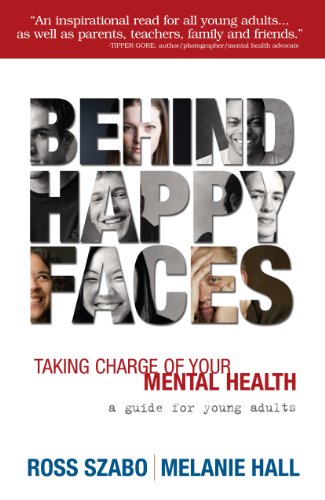
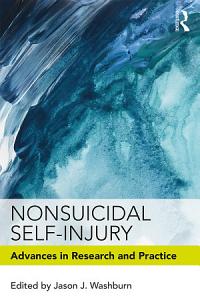
 On Sept, 28 the Glenbard Parent Series hosted mental health advocate Ross Szabo and clinical psychologist Jason Washburn Ph.D. in a program titled "Behind Happy Faces: Suicide, Let's Talk About it".

Ross Szabo is an award-winning pioneer of the youth mental health movement and the CEO of the Human Power Project.  He is the author of Behind Happy Faces: Taking Charge of Your Mental Health and A Kid’s Book About Anxiety.  He has spoken to more than 1 million students about the importance of mental health and provided a positive example to empower them to seek help.

Dr. Jason Washburn joined us to help provide an understanding of common mental health conditions such as anxiety and depression and their individual differences, is licensed clinical psychologist.  Dr. Washburn spoke on suicide myths and facts, suicide contagion, risk factors, as well as warning signs, and provided prevention tips for parents and students. He is the Director of the Center for Evidence-Based Practice at Amita Health, a Professor at Northwestern University Feinberg School of Medicine where he is the Director of Graduate Studies for the MA and PhD programs in Clinical Psychology, and Director of Research in the Center for Childhood Resilience at Lurie Children’s Hospital.


Assistant Superintendent for Student Services, Janet Cook shared remarks following the program and this  takeaway:

"Normalize mental health, seeking help is a sign of strength, and the earlier, the better.  Educate your child about their family history, and  yourself on the warning signs.  Empower your child, don't enable them. Turn confrontation into conversation-always leaving the door open to talk.  Ask open-ended questions.  Check in regularly, do not fear asking directly about suicide, it saves lives: remain clam, nonthreatening, respond with empathy, reassurance and validation, letting them know you care, and that help is available. Help them prioritize the positives, model healthy coping strategies and self-care. The schools are engaging in the worked needed to support mental health and will keep moving forward in this area."


RESOURCES