Thursday, April 23, 2015

Educators, Student and Parent share takeaways from GPS event by Nick Sousanis


Glenbard staff members attend Glenbard Parent Series programs, too. Here are a couple of their takeaways from the April 21 program Do You Speak Visual: How Visual Literacy is Essential for School Work and Life with Nick Sousanis.

Glenbard South instructional tech specialist Stephanie Wallace said, "Nick Sousanis gave a compelling and thought provoking talk on the history of comics (and/or graphic novels), our perception of them as a society and their possible role in student literacy. Our students consume visual media in huge quantities. As teachers, we need to help them decode and analyze what they see. We also should encourage and guide them to create their own images to visualize understanding, organize thoughts and concepts and tell their own stories. This was a really rich experience!"
South instructional tech specialist Stephanie Wallace (left)
and South art instructor Tatiana Heise
 

Glenbard South art instructor Tatiana Heise said, "Dr. Sousanis brought to life the idea that we all desire to speak our truths, to find a way to genuinely express our story and to help encourage and lead others to do the same. I walked away with a much deeper understanding of how we all break up space within our day and how the comic format is a powerful application and hotbed for rich learning opportunities and processing. Text is not isolated from image; image is not isolated from text. They are a conversation that informs its equal and respective parts.  It is within this natural application that we can understand the relationship of our thoughts and experiences in not only a linear and sequential way, as we are trained to do in traditional narrative texts, but also in a way that encourages relational processing - one that gives us opportunities and the responsibility to make connections - to fill in gaps, and to view information that came before, after, peripherally, as well in the moment of time we are currently experiencing."

St. Pet's 8th grade student, John Kenny, comments "I've learned that even though comic books and graphic novels are normally stereotyped against, they can be just as valuable as text-only books."
 
His mother, Polly Kenny said "I appreciated that Dr. Sousanis showed us powerful "cartoons" that we have valued throughout history (such as political cartoons).  And he explained how cartoons and graphic novels as a medium (in addition to all-text books) can expand our ways of sensing and "knowing" a topic.  Younger students and adults alike can benefit from this mix of visuals and text, how they interplay with one another, and how cartoons can cross time periods and bring together topics on one single page in a way that text media alone cannot.  I can see his work helping people understand how cartoons and graphic novels can add value both in the learning process and as a way for students to process and  express the things they are learning and trying to master!" 

Wednesday, April 15, 2015

Two Great Programs Next Week
by Dr. Edward Hallowell
Best selling New York Times author and world-renowned ADHD expert


Tuesday, March 24, 2015

April Glenbard Parent Series Events Cover Hot Teen Topics


Before you head off on Spring Break, mark these THREE April GPS events on your calendar:


“Where You Go Is Not Who You’ll Be:
An Antidote to the College Admissions Mania "
 Frank Bruni
Wednesday, April 8, 7:00 p.m. 
Glenbard West High School


“Parents, Teens, Parties and the Law- Surprising Trends in the Teen Party Scene” 
Hon. Judge C. Stride, Det. Bruce Talbot (Ret.) 
and Milton Creagh
Thursday, April 14 7:00 p.m.
Glenbard East Auditorium


“Depression: Recognizing the 
High School Blues”
Dr. Jason Washburn
Thursday, April 16, 12:00 p.m. to 2 p.m.
Glenbard South Auditorium


More information at: Glenbard Parent Series Web Page

Tuesday, March 17, 2015

"The Power of the Teenage Brain: Understanding Teen's Emotions, Relationships and Decisions" 
By Dr. Tina Payne Bryson


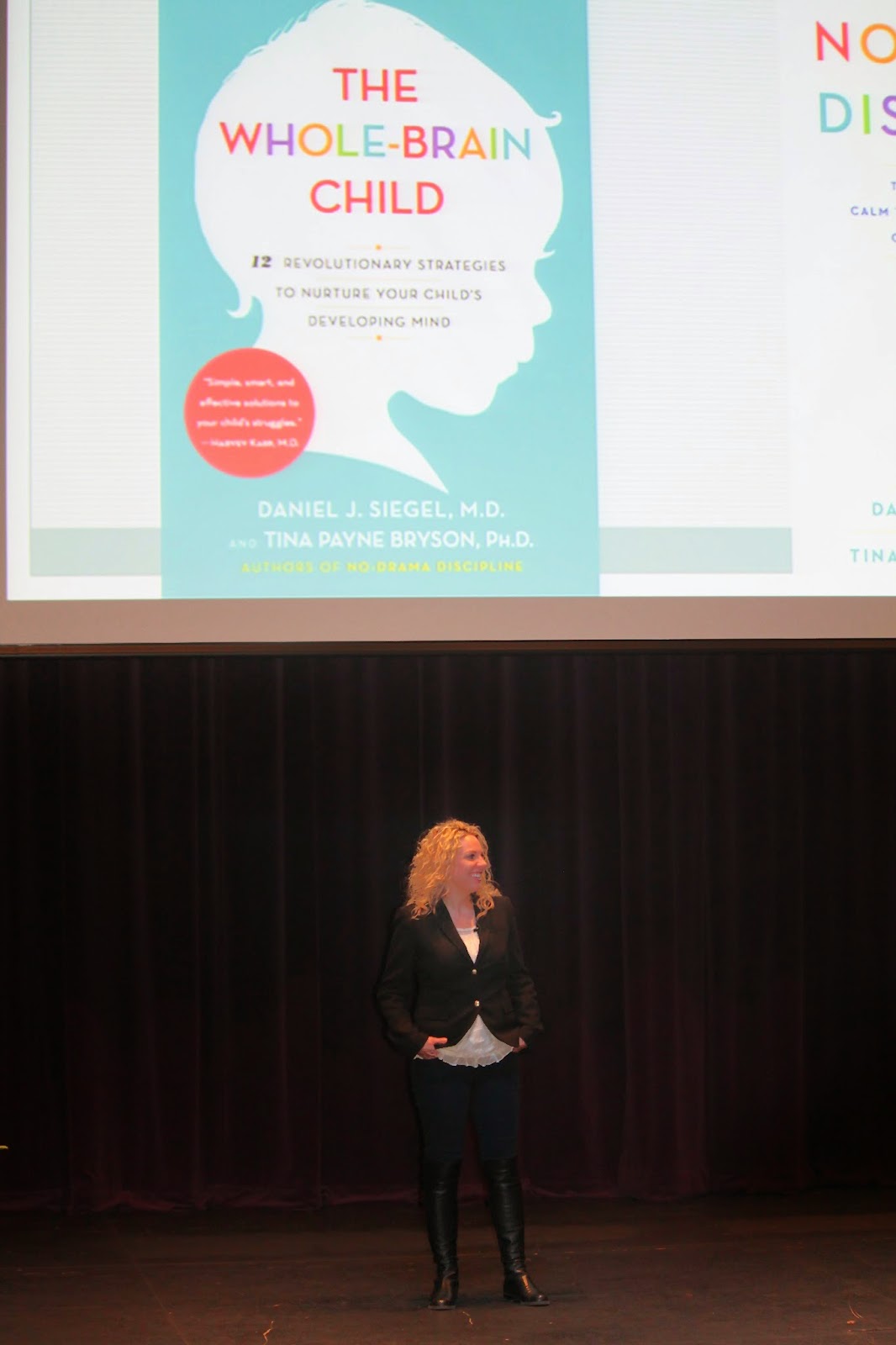
The Glenbard Parent Series: (GPS) Navigating Healthy Families, presented "The Power of the Teenage Brain: Understanding Teen's Emotions, Relationships and Decisions" with renown adolescent psychotherapist and bestselling author Tina Payne Bryson PhD at 7:00p.m. Wednesday, March 11, at the College of DuPage McAninch Arts Center  (MAC).
  • A note from Dr. Payne Bryson
  • Parent's Take-Away
  • Summary: Bryson Explains Why the “Whole Brain” is Greater Than the Sum of it's Parts


A message from Tina Payne Bryson, Ph.D.:
Thanks for attending the presentation this week.  I hope you gained new insights and applications for relating to the children you care about.  If you're interested in learning more, or you'd like to receive my newsletter and social-media blasts, please click the links below.  (Just so you know, I send out only three or four emails per year.  So don't worry that I'll bombard you!)
Also, remember that you can read articles about kids and parenting at my website, TinaBryson.com.
Warmly,
Tina


Click here for my website, where you can subscribe to my newsletter.

Lynn Dugan, Glenbard West parent shares her five take away's-
Tonight's Glenbard Parent Series program was a "Wow!"  In this terrific session there were so many great points-
  1. Discipline equals teaching and skill building.  As parents, we can have high expectations/firm standards AND be emotionally nurturing and available.
  2. As parents, we can turn our teens’ struggles into opportunities for positive change.  Look BEHIND the behavior (chase the WHY, behind the behavior).
  3. An important strategy for dealing with an hyper emotional or upset teen is to CONNECT and REDIRECT.  Connect first emotionally, then when they have calmed down- offer reason, discipline and strategies.  Teens have to be in a receptive state (not a reactive state) to receive discipline and redirection.
  4. ENGAGE, DON’T ENRAGE
  5. Teens need to be safe, secure, seen and soothed.  How am I doing?  I need to ask my kids,  'Do you think I am on your side?'

BRYSON EXPLAINS WHY THE “WHOLE BRAIN” IS GREATER (AND BETTER TO USE) THAN THE SUM OF ITS PARTS

              Tina Payne Bryson Ph. D., coauthor of The Whole-Brain Child (with Dan Siegel MD), wants parents to better understand how our brains work. Once we do we can optimize our cognitive abilities when dealing with our adolescents and “discipline” them with the true meaning of the word in mind.

            In her presentation March 11th at the College of DuPage McAninch Arts Center for the Glenbard Parent Series Bryson used several humorous antidotes to illustrate how the left hemisphere of the brain, that which governs logic, lineal thinking, linguistics and literal interpretation, operates (or should operate) in conjunction with the right hemisphere of the brain, that which governs emotional interpretation, non-verbal cues, whole-picture-context thinking, body language and random assortment of information.

            When adolescents are having an “emotional tsunami,” parents often respond trying to use logic. Bryson explains why this doesn’t work. When emotions “run high” there is “hyper-arousal.” Kids become defensive and can’t think clearly and can’t even hear what you’re saying.

            When responding to an upset adolescent, Bryson recommends using “connect and redirect.” This technique promotes the integration of the left and the right brain. To “connect” with the child, a parent should use a relaxed posture and calm voice. This will not only calm down the child, but the parent as well. Use non-verbal touch to comfort and then empathy to acknowledge the child’s feelings. This is right brain thinking.

            To  “redirect” a parent should ask open-ended questions and guide the child to solutions, planning, logical explanations and boundary setting. This is left brain thinking.

            Bryson reminds us that the true definition of the word discipline is “to teach” not “to punish.” When your adolescent is “acting out” ask yourself questions? Why did my teen act this way? Be curious and look behind the behavior.

            Remember. “Struggles equal opportunities.” All behavior is a form of communication. Adolescence is not just about raging hormones. The experiences teens go through cultivate new great abilities.

            In adolescence the brain is becoming specialized. As Bryson puts it, “Where attention goes neurons fire. Where neurons fire, the brain rewires.” Parents can play a role in how their teen’s brain develops. Teaching them to integrate both sides of the brain will give them life skills larger than the sum of their parts.

Suzanne Burdett is a freelance writer and a Glenbard parent.

Thursday, March 5, 2015

Christine Carter on Wisdom

One of our favorite past GPS speakers has forwarded a link to a recent talk she gave at the Wisdom conference. Check it out.  

http://r20.rs6.net/tn.jsp?f=001Rujl6K7hiP63ivooHPpUeko1opSpAdT0Q4rrpxptnAtZ6AyeesKuUxZ2XvFhoFx-z2h_BSMyfzvjc_UJSs8XOCKC7xNuwJNFnzC3FDIWdltATme8P9i7vdGRlBc-0sy2vT_NMbvqkZElVXp95T9zi9tr7MdQmonAqXThHKyw-kfZ5hi7E1ZCIg==&c=hSnnLXHls1KtkSxT6o9iq4z0zUMIXwtfudjtjq96GnULRjPsxHWxxQ==&ch=ktbc2usW36BBx4olHKZsOayFV8xT3wkmE_evCvtVdGiW9Fr2j2C66A==

Wisdom 2.0


I love, love, loved being at the Wisdom 2.0 conference this past weekend. One of the highlights of my life! Watch my talk...


http://r20.rs6.net/tn.jsp?f=001Rujl6K7hiP63ivooHPpUeko1opSpAdT0Q4rrpxptnAtZ6AyeesKuU5j8N9qy8FE7o06LUQCMfOifyxlDdeT9FtToDy9n5CujcypTJ6rF2ROHHlt69arlI_47Mi1FqTGliHH9pOeBNFgt-5HTsoAwdlagDBgzxekOrHf0zEClbagDCe2C34pCPhcJ4rjNGhWrqSXdkY4M-tkJgDDtdA05BA_BrnrtVtAVEXYKNujMy44HTqH0_2DEHQ==&c=hSnnLXHls1KtkSxT6o9iq4z0zUMIXwtfudjtjq96GnULRjPsxHWxxQ==&ch=ktbc2usW36BBx4olHKZsOayFV8xT3wkmE_evCvtVdGiW9Fr2j2C66A==

Wednesday, March 4, 2015

Nibble, Then Quibble l February/March 2015

Nibble, Then Quibble

A tip to quibble less nibble more-useful for couples and communication with teens, from The Family Institute at Northwestern University

http://ih.constantcontact.com/fs194/1101817468176/img/557.png 
FEBRUARY/MARCH 2015

Nibble, Then Quibble

Nibble, Then Quibble l February/March 2015

Tuesday, March 3, 2015

Receiving Criticism l February/March 2015

Receiving Criticism

It bears repeating -kids hear 1% of everything we say and 100% of everything we do-including receiving criticism. How good are you at receiving criticism?  From The Family Institute at Northwestern University


http://ih.constantcontact.com/fs194/1101817468176/img/549.png 
FEBRUARY/MARCH 2015

Receiving Criticism

Can your kids easily accept criticism? Can they receive feedback calmly and with an open mind, or do they get touchy and defensive?

Receiving Criticism l February/March 2015

Monday, March 2, 2015

Rethinking challenging kids-where there's a skill there's a way | J. Stu...

If you missed Dr. J. Stuart Albon at February's GPS events: “Rethinking Challenging Kids: Collaborative Problem Solving” and “Collaborative Problem Solving to Resolve Conflict”,  take a moment to view this TEDx video:

Published on Oct 24, 2014
This talk was given at a local TEDx event, produced independently of the TED Conferences. Challenging behavior exhibited by children and adolescents is a common concern and frustration for parents, teachers, and other helpers.


Parent shares takeaways from GPS event
on Collaborative Problem Solving

South parent Anne Bouchard with
GPS guest speaker J. Stuart Ablon
Glenbard South parent Anne  Bouchard shares her impressions  of last night's  (GPS)  Navigating Healthy Families program Collaborative Problem Solving to Resolve Conflict: Kids Do Well If They Can. "Kids do well if they can. If they can't, something is getting in the way. We need to figure out what so we can help."  These two sentences beautifully summarize Dr. Ablon's approach.  In his talk, he explained that it is a person's lack of skill and not a lack of will that results in challenging behavior.  Research has shown that kids who are delayed in the development of crucial skills - like flexibility/adaptability, frustration tolerance, and problem-solving - have significant difficulty applying these skills when they are most needed.  When a kid (or even an adult) does not have the skills to handle a situation/expectation, challenging behavior occurs.  These lagging skills can be in any number of areas, including language and communication skills, emotion and self-regulation skills, or even social thinking skills.

Once the challenging behavior occurs, you have three options: Plan A - Impose your will, Plan B - Solve the problem collaboratively, or Plan C - Drop it (for now, at least).   With Plan B the child expresses his/her concern, the parent shares his/her concern and then together they brainstorm about a solution.  Dr. Ablon discussed how the use of Plan B can not only result in problems solved, it can also enable development of the very skills that are lagging and which are at the root of the challenging behavior.

We need to change our mindset about challenging behavior:  view it as you would a learning disability and then treat it as such.  Make an assessment:  when does the challenging behavior (lagging skill) occur and why (trigger/expectation)?  Once you identify which skills are lagging/insufficient, and also identify the triggers or expectations, you can respond with Plan A, B, or C. Dr. Ablon also noted that the only reliable predictor of success in helping people change is the relationship between the helper and the "helpee."  It takes empathy and understanding to make this helping relationship work.  Dr. Ablon also suggested that you tackle small problems at first. 

While using Plan B isn't magical, and requires a lot of practice, the good news is that the more you employ the Plan B approach, the more skills you build.   Additionally, every time you employ Plan B, you work on and improve your own skills, too."